Study Hacks Blog

The Pope vs. Silicon Valley

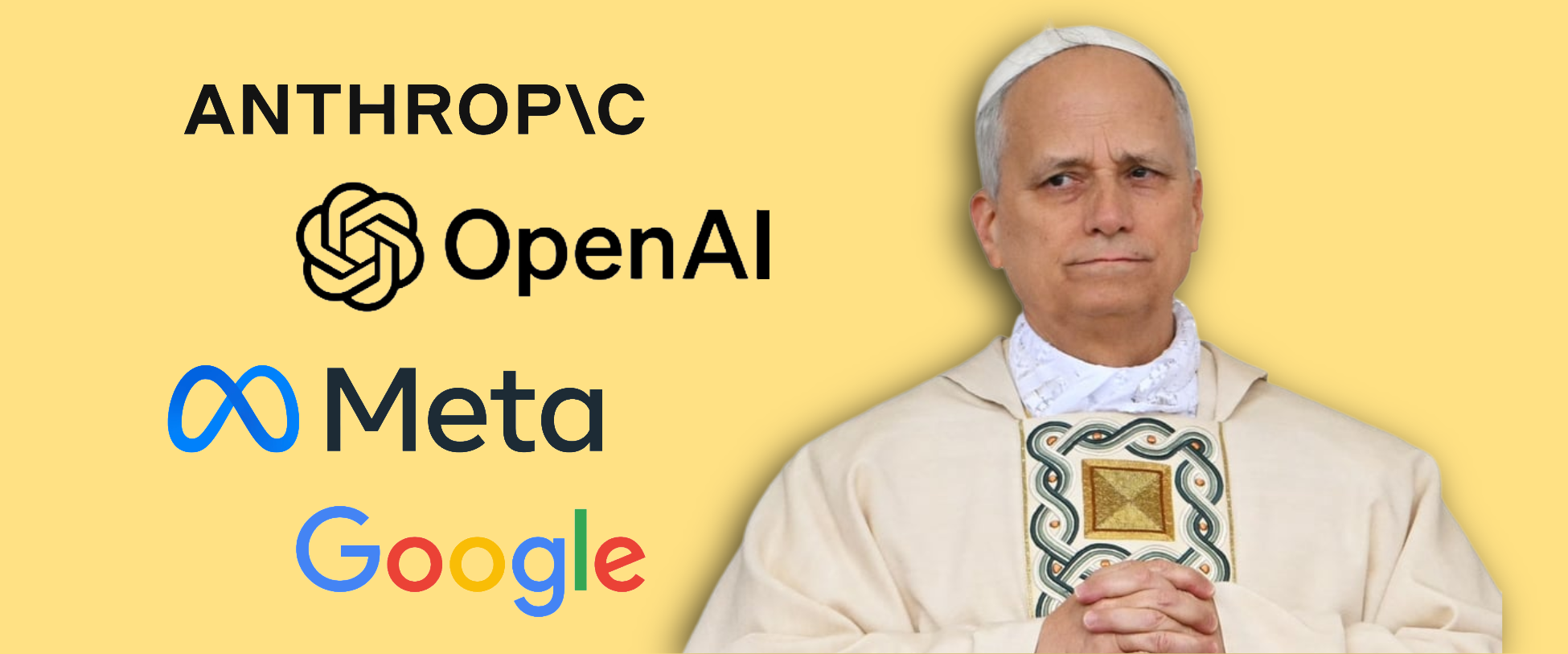
Last fall, the Notre Dame philosopher, Meghan Sullivan, participated in a closed-door meeting at the Vatican. She was there to discuss AI ethics with a group of religious thinkers, academics, and leading members of the technology industry.

As Sullivan recalls in ​a recent newsletter​, she attended an optional Catholic Mass the first morning, held in an ancient church. She was surprised to see one of the tech leaders sitting a few rows away in the pews. “[This was] the kind of guy you typically see in a black t-shirt and chinos,” she writes. “That morning he was dressed in a brown suit and tie, quietly taking in the sanctuary as the first rays of morning light filled the room.”

After the service concluded, they chatted. The tech leader, it turned out, was not Catholic. When Sullivan asked him why he was here, he gave the following answer:

“We’re building something that is going to change life as we know it. I want to make sure I keep in touch with what humans have always cared about. This is a place that takes care of those values.”

I found this interaction chilling. Not because of what it says about potential AI disruptions, but because of what it tells us about the engineers developing this technology.
Read more

On God and LLMs

The second chapter of Genesis poetically describes the beginning of the human story. “The Lord formed Adam from the dust of the earth,” it reads. … Read more

The Dark Side of the Jevons Paradox

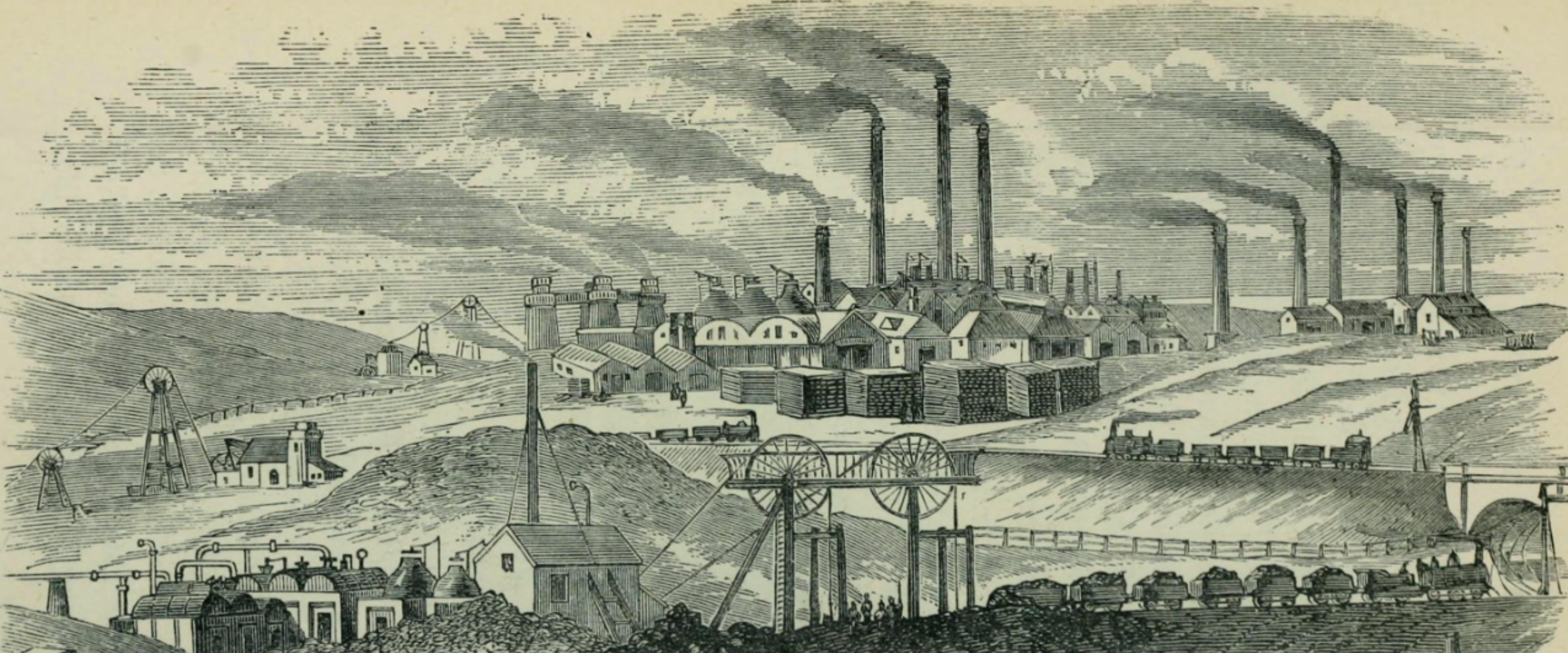
If you’ve been following technology news recently, you’ve probably noticed a sudden increase in references to a 19th-century economics theory called the ​Jevons Paradox​, which is named for the neoclassical economist William Stanley Jevons, and captures the observation that increasing the efficiency of a resource can lead to greater consumption.

Jevons first articulated this idea in an 1865 book, pithily titled, The Coal Question: An Inquiry Concerning the Progress of the Nation, and the Probable Exhaustion of Our Coal-Mines. He argued that building more efficient steam engines – ones that required less fuel to generate the same power – would not solve the problem of England’s diminishing coal supplies. If you made the engines more efficient, Jevons predicted, people would find more applications for steam power, and even more coal would be burned overall.

Read more

Easy is Overrated

“Something is up in academic research,” ​write​ the members of an AI Task Force convened by the journal Organization Science. As they go on to elaborate:

“If you are an editor or reviewer at a journal these days, you probably already know this. The manuscripts are arriving in greater volume, with a particular feel that is hard to pin down. On the surface, the papers look the same as ever, but the writing feels weightless in a way that rarely describes academic writing…you find yourself scratching your head at the meaning the words are trying to convey.”

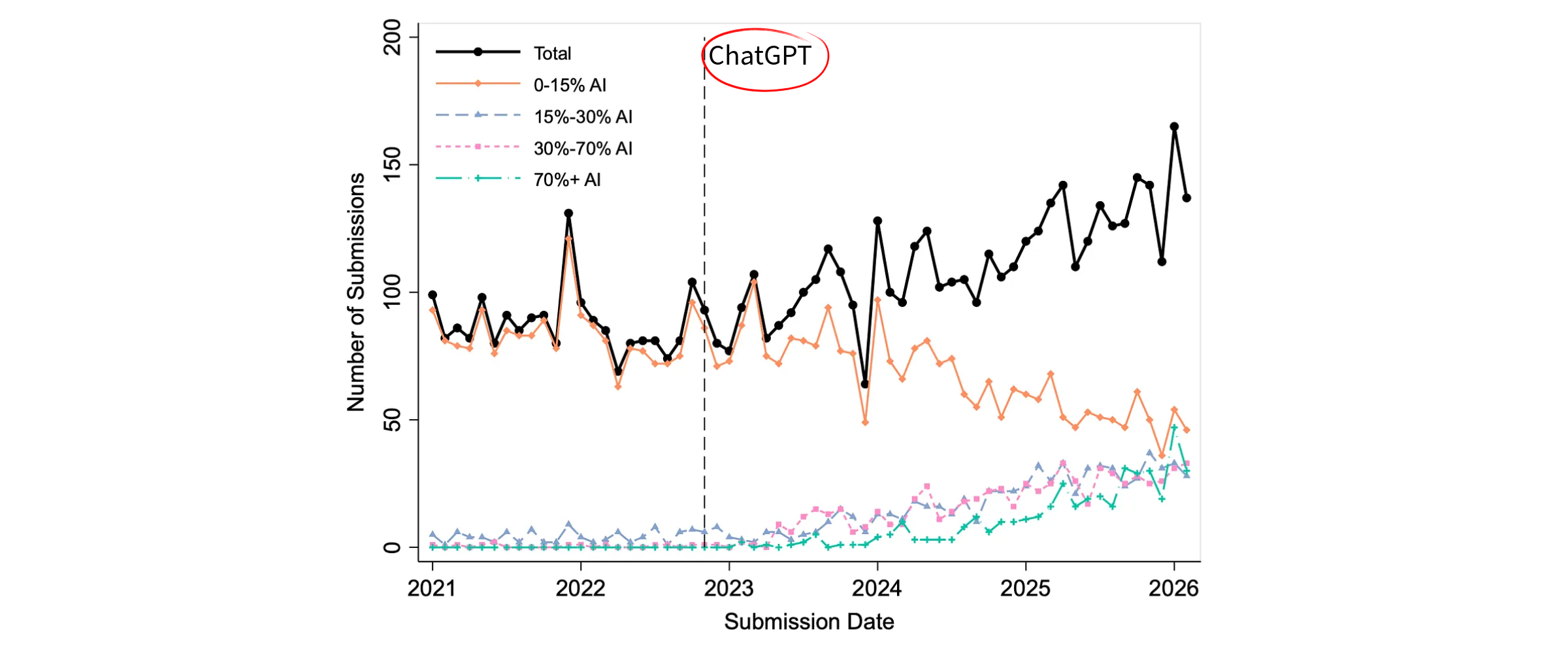
The culprit? The task force crunched the numbers and produced a clear answer. Starting in 2023, after ChatGPT became available, the number of submissions to Organization Science rapidly increased. At the same time, the percentage of submissions classified as using minimal AI has plummeted from near 100% down closer to 30%.

The impact of this shift on readability has been marked, with scores on a standard “reading ease” metric falling by 1.28 standard deviations between January 2021 and January 2026:

“Submissions have become far harder to read,” the Task Force reports. “This is counterintuitive. Most people assume that AI produces cleaner, more polished text. And in some narrow dimensions, it does…but on the measures that capture whether a reader can actually parse and absorb the prose, AI writing is worse…[using] longer words, more complex sentence structures, more jargon, and more nominalizations.”

Read more

On Bottlenecks and Productivity

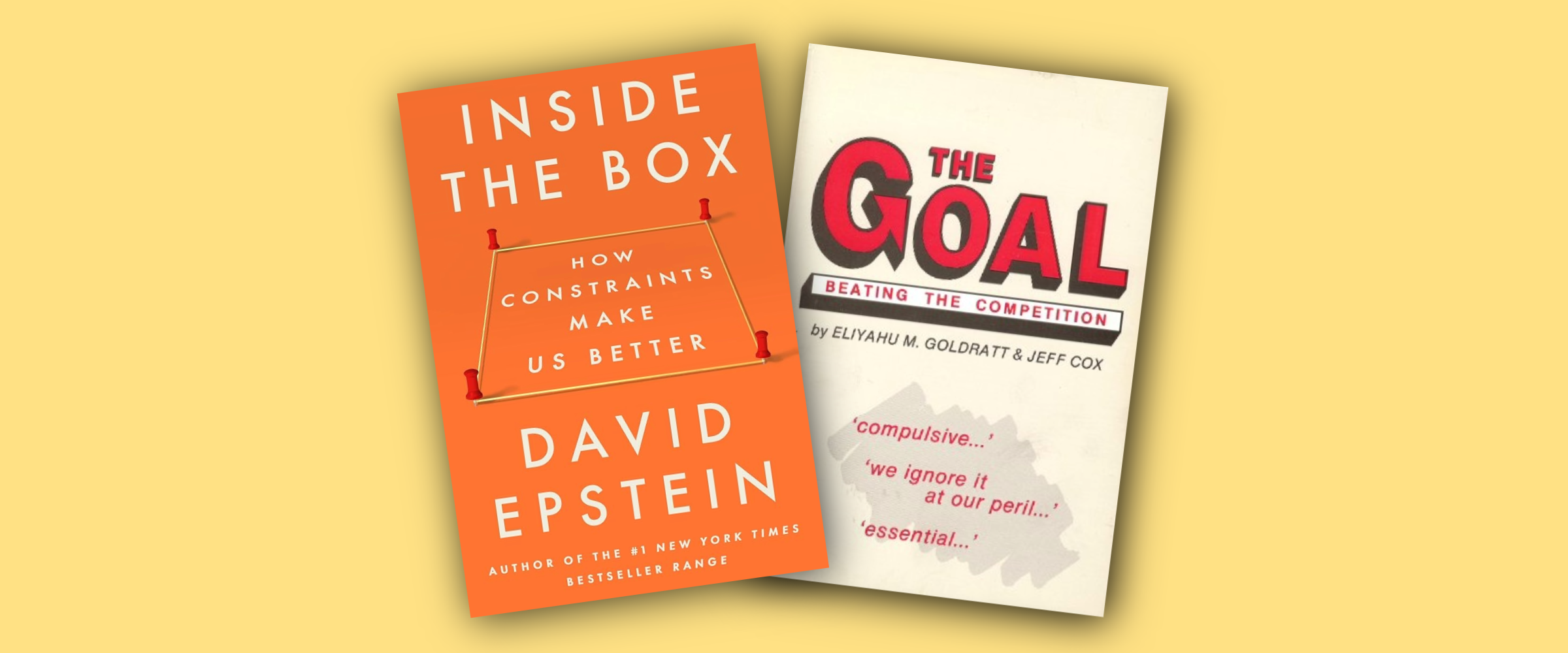
David Epstein, the #1 New York Times bestselling author of The Sports Gene and Range, has a new book out called Inside the Box. As with all of Epstein’s books, I really enjoyed it. He’s one of the best storytellers currently working in idea writing.

There was one chapter in particular, however, that captured my attention as being uniquely well-suited to the themes we discuss here. It focused on the ideas of a somewhat eccentric physicist-turned-management guru named Eliyahu Goldratt, who in the 1980s popularized a framework for understanding industrial productivity that he dubbed the “theory of constraints.”

Here’s how a non-profit established to promote Goldratt’s work summarizes it:

Read more

Who Asked For This?

Last week, Elizabeth Lopatto published an insightful article in The Verge. It boasted an intriguing title: ​“Silicon Valley has forgotten what normal people want.”​

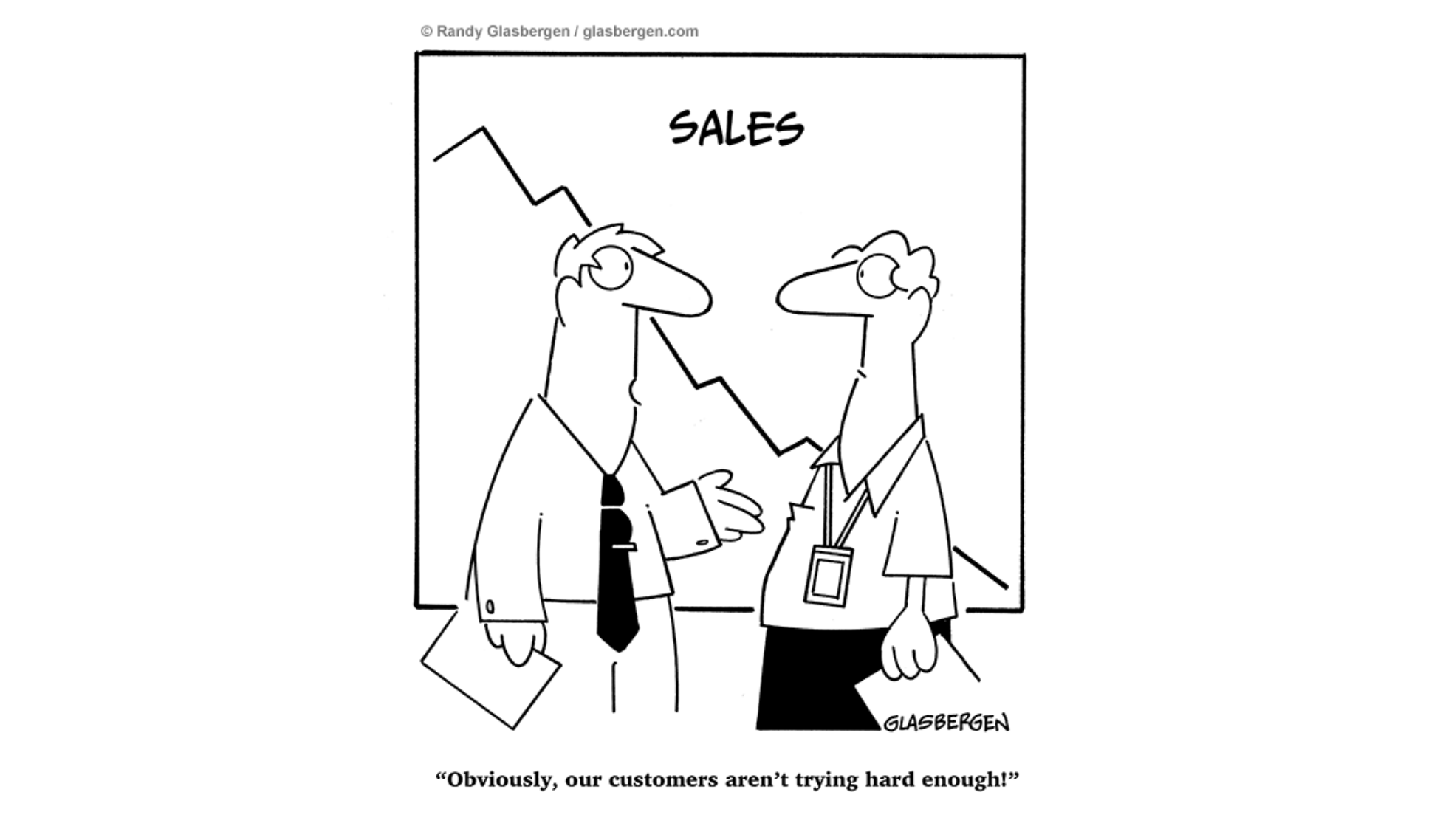
“Within recent memory, people who made software and hardware understood their job was to serve their customers. It was to identify a need, and then fill it,” she writes. “But at some point following the financial crisis, would-be entrepreneurs got it into their heads that their job was to invent the future, and consumers’ job was to go along with that invented future.”

I certainly noticed this shift when it first began emerging. See, for example, my 2015 article titled, ​“It’s Not Your Job to Figure Out Why an Apple Watch Might Be Useful.”​ But it really picked up speed in the last half-decade. Here’s Lopatto with a needle-sharp summary of our current status quo:

Read more

Brandon Sanderson vs. AI Art

Late last year, the fantasy novelist Brandon Sanderson gave a talk at Dragonsteel Nexus, an annual conference organized by his media company. It was titled, ​“The Hidden Cost of AI Art.”​

As Sanderson explains, early in his address: “The surge of large language models and generative AI raises questions that are fascinating, and even if I dislike how the movement is going in relation to writing and art, I want to learn from the experience of what’s happening.”

Sanderson makes it clear that he disapproves of AI-generated art (“my stomach turns”), but he wants to understand better why this is the case. To do so, he begins considering and then ultimately dismissing a series of common objections:

  • Does he dislike AI art because of the economic and environmental impacts? “Well, those do concern me, but if I’m answering honestly, I would still have a problem with it even if AI were not so resource hungry.”
  • Does he dislike AI art because it’s trained on the work of existing artists? “ Well, I don’t like that. But even if it were trained using no copyrighted work, I’d still be concerned.”
  • Does he just hate the idea of a machine replacing a person? Sanderson references the folk tale of John Henry attempting to beat a steam drill in a tunnel-digging competition that culminates in Henry’s death. “We respect him, but as a society we chose the steam drill. And I would too…The truth is, I’m more than happy to have steam engines drilling tunnels for me to drive through.”

So what is it?

Read more